“I was only a child. But even then, I learned what humanity means.” - Boris Franzke
“I was only a child. But even then, I learned what humanity means.”
Boris Franzke
Airlift Child
Born 1939
Kaffeeklatsch with Boris Franzke
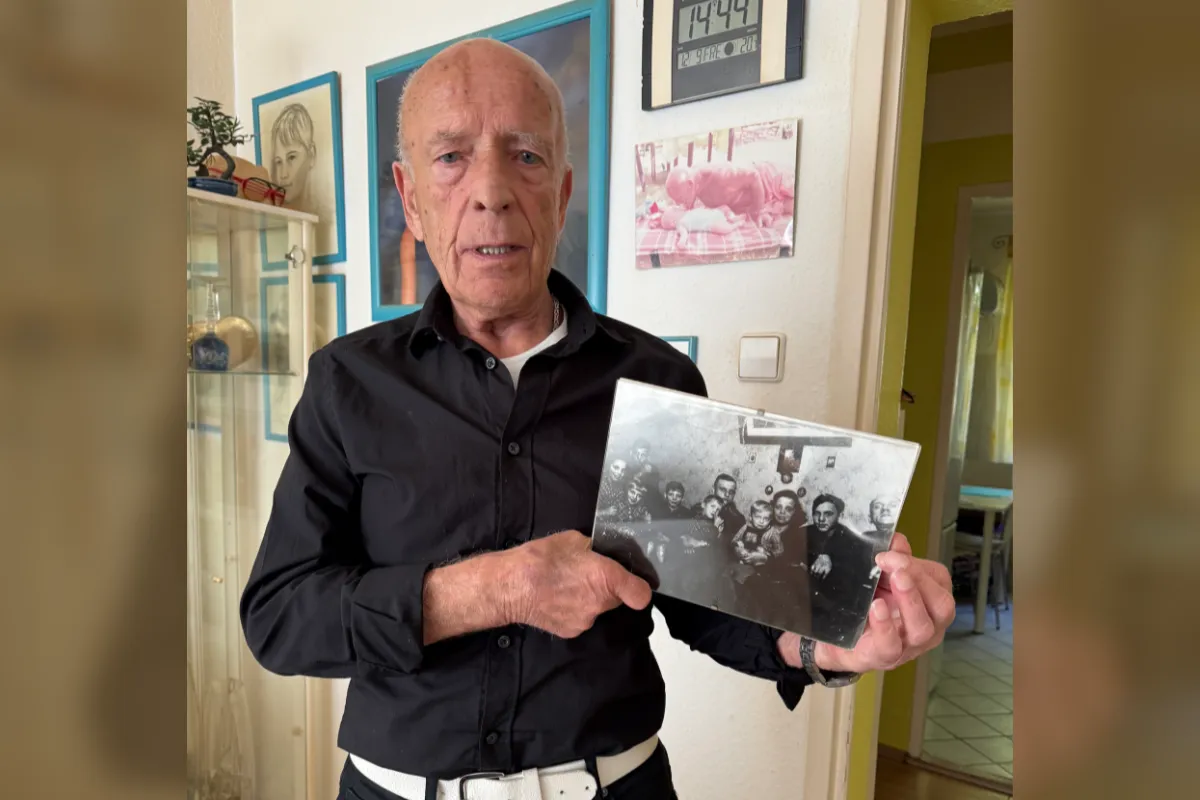
We met through the Zeitzeugenbüro (Time Witness Office). On a warm September afternoon, Boris Franzke invited me for coffee at his apartment. Surrounded by many family photographs that tell the story of a long and eventful life, we sat together for several hours. Calmly, matter-of-factly, and with great focus, he shared his memories—of the war, the postwar years, the Berlin Airlift, and life in a divided city. He did not use grand words. His stories were compelling precisely because of their restraint and this quiet sense of “that’s just how it was.”
The years of the Cold War also came up in our conversation, including his later involvement in building a total of eight tunnels under the Berlin Wall; one of them was successful and enabled 27 people to escape to the West. He spoke about this without pathos as well. On one occasion, this commitment nearly cost him his life—but that is another story.
“I was only a child. But even then, I learned what humanity means.”
My Memories of the Berlin Airlift
I was nine years old when the Berlin Airlift began.
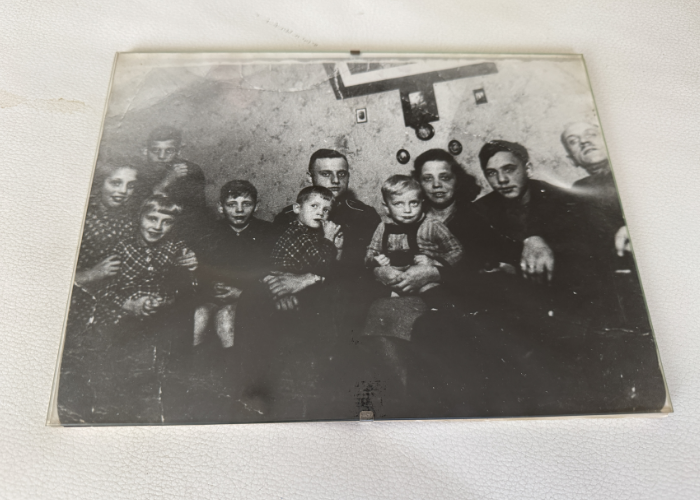
We lived in West Berlin, in Friedenau. The war was over, but peace didn’t feel quite like peace either. My father was still a prisoner of war in Russia; my older brothers had either been killed or were not at home either. My mother was left alone with four children. There was hardly any food, hardly any fuel for heating, hardly any hope.
In the winter, it was bitterly cold. We had nothing to heat with. My mother owned an old, heavy cast-iron iron. You could put hot coals or pieces of wood inside it. Before we went to bed in the evening, she would place the warm iron between the sheets so they would at least be a little warmed. That was our luxury.
Hunger was part of everyday life. We children went into front gardens and collected anything that could somehow be eaten—potatoes, turnips, sometimes plums. My mother knew it wasn’t right, but she also knew her children had to eat. Potato peels were never thrown away. They went through the meat grinder and were made into small patties. We ate those too.
When the blockade began, everything became even more difficult. No coal, no food. And then the airplanes came. I remember exactly how the droning filled the city. A sound you could not ignore. Day and night. For us children, this was not about technology or politics. It was life.
We often stayed near Tempelhof airport where the planes landed. And sometimes something happened that made us forget our hunger for a moment: small parachutes floating down from the sky. Sweets, dropped by American and British pilots.
Whenever a parachute appeared, all the children would run. Entire streets suddenly seemed deserted. Once, a parachute got caught in a tree. No one dared to climb up. My brother did it anyway. When he came back down with the chocolate, we were the kings of the neighborhood. It was Cadbury chocolate. I remember it very clearly. Having a whole bar to yourself was practically unheard of. It was shared. Always.
We also went to the American barracks, the McNair Barracks. The soldiers were kind, especially to us children. There was chewing gum. Today, that sounds trivial. Back then, it was a small miracle.
As a child, you don’t think about why things happen. You only notice that you are less cold. That sometimes you have something in your stomach. And that you survive.
Once, a plane crashed near where we lived. I can still see it. A house was hit. For us children, it was unimaginable. These men were flying for us. They were risking their lives so that we would not starve.
Later, my mother moved with us to East Berlin, to Pankow. There was more food there, and more support for large families. The Airlift was still going on. For us, this was not a political decision. It was a decision for survival.
Today, many decades later, I often think back on that time. What shaped me most was not just the hunger or the cold. It was the sense of solidarity. People stuck together. They shared what they had. Everyone knew the other was suffering just as much.
The Berlin Airlift was more than a logistical achievement. For us, it was a promise. A promise that we had not been forgotten. That there were people willing to help, even when it was dangerous.
I was only a child. But even then, I learned what humanity means.