The Sky Over Berlin – A Childhood Between War, Hunger, and Hope - Susanne Hoernicke
The Sky Over Berlin – A Childhood Between War, Hunger, and Hope
Susanne Hoernicke
Airlift Child
Born 1935
A Conversation Between Generations
How I Met Susanne and Katharina
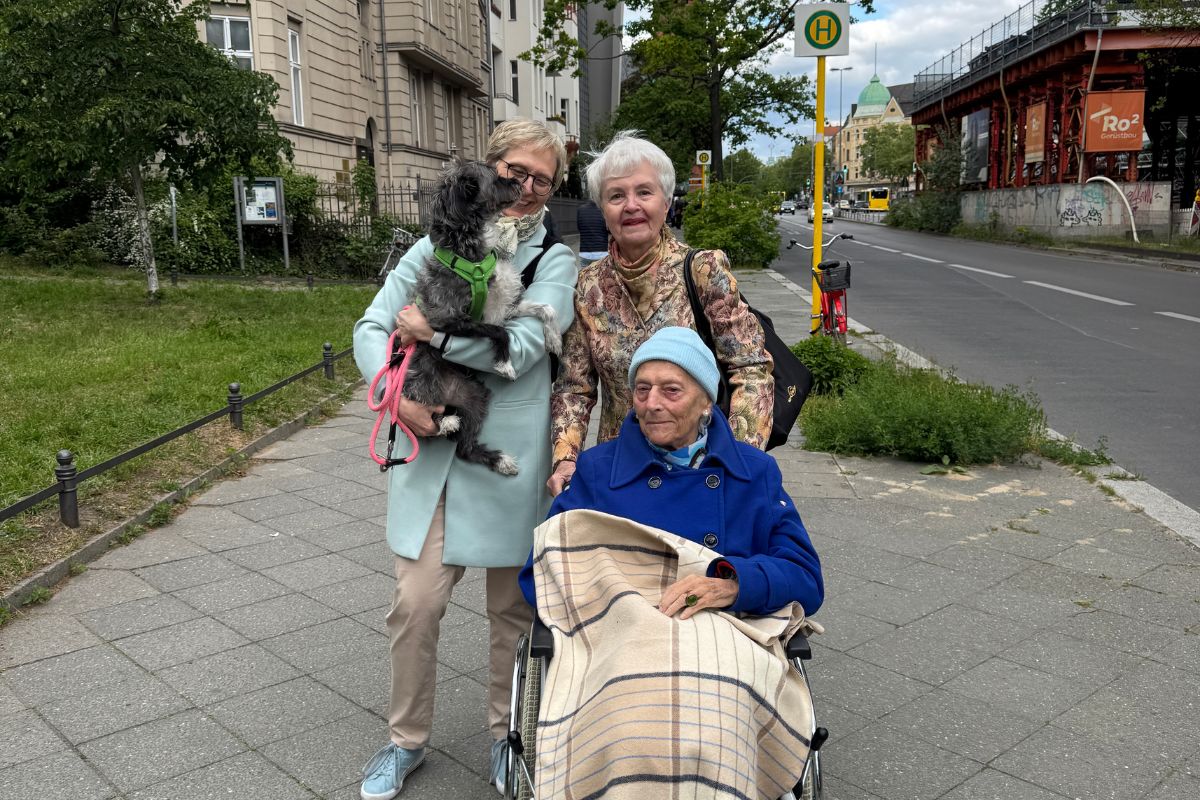
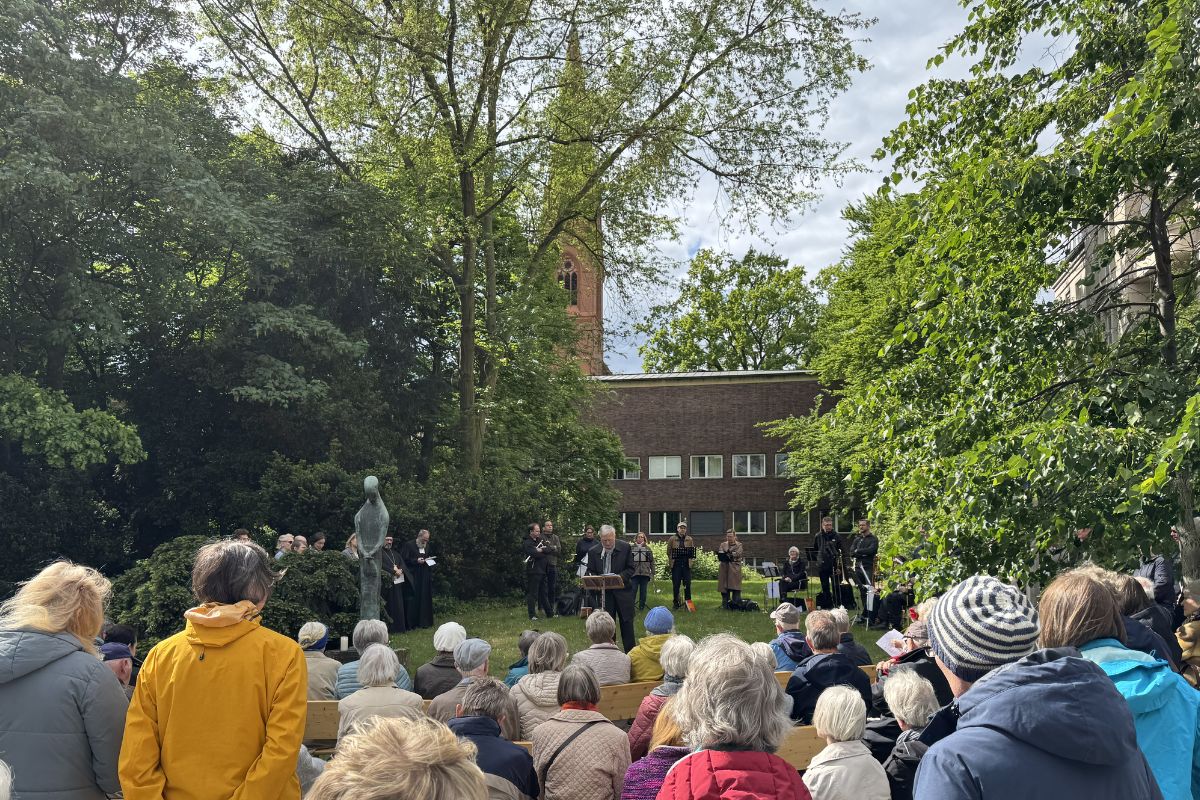
I met Susanne and her daughter Katharina on May 8, 2025—the 80th anniversary of the end of World War II—during a memorial service at the Matthäus Church in Berlin, the very church where I had been confirmed at the age of sixteen.
Katharina stood next to me, her mother Susanne right beside her. Between music, various speeches, and quiet moments of remembrance, we began talking.
When I learned that Susanne had grown up in Berlin, I asked whether she remembered the end of the war—or perhaps even the time of the Airlift. Katharina smiled and said that her mother had many memories of that time. We agreed to meet again the following week to sit down over a cup of coffee and to let her share her memories.
The Sky Over Berlin – A Childhood Between War, Hunger, and Hope
Memories of Susanne Hoernicke, gathered during a conversation at a patisserie in Berlin-Steglitz
Some memories lie dormant—buried deep beneath everyday life and the passing years. But as I sat with Susanne and her daughter Katharina at a small table in a Berlin patisserie, I could witness how, through my questions, those memories slowly rose to the surface: images from the rubble, the flicker of a lamp in an air raid shelter, the scent of a rare piece of chocolate.
Susanne was born in 1935 in Berlin-Dahlem. When she was twelve years old, the blockade began, and her earliest conscious memories are shaped by the atmosphere of war and post-war hardship. At the café, with a hot chocolate in front of her and her daughter Katharina by her side, the memories returned—sparked by questions, by glances, by long-stored images in her mind.
Her family lived in Steglitz during the blockade, directly under the flight path of the “candy bombers.” Susanne remembered the deep roar of the planes overhead—they were loud, almost menacing, yet at the same time carried the promise of survival. The planes brought food, warmth, and hope to a city on its knees.
“I remember the planes during the Airlift—that constant roaring above our heads. I must have been about seven, and although we didn’t stand directly at Tempelhof Airport, we knew: those up there were bringing us life. At community events there was chocolate—real chocolate!—and for us kids, it was like Christmas and a birthday rolled into one.”
One especially vivid memory was the arrival of a CARE package. Her mother had just said, “Now we truly have nothing left to eat,” when the package arrived. It was like a miracle. Relatives in California had sent it—Olaf was his name, a cousin whose parents had once emigrated to Mexico and later to the USA. This single package meant so much; it was a sign of connection across continents. Years later, for more than 34 years until her death, Susanne sent a small thank-you package back to California every Christmas as a quiet gesture of gratitude.
This sense of care and protection—whether through a package from overseas or through small gestures in everyday life—ran throughout Susanne’s childhood. For a period of time, she was even placed in a children’s home in Potsdam, where her parents had sent her temporarily to protect her from the bombings of Berlin. This time, too, left a deep imprint on her memory: “Metal bowls that clanged loudly when the spoon hit them—that sound still echoes in my ears. Not everyone had shoes. I remember a classmate whose feet were wrapped in cloth. And I still recall how proud I was sitting in the children’s home in Potsdam, thinking: ‘I’m already big. I have to be brave now.’”
From the end of the war onward, the family lived in constant fear. Russian soldiers entered their apartment multiple times. Susanne and her sister were sometimes hidden behind piles of laundry or dressed to look like elderly women. Their mother showed a strength that Susanne admired her entire life.
The experiences of those years left deep marks. Even today, Susanne feels a profound unease around loud or aggressive men—an echo of the threats from that time. And yet, this conversation was filled with gratitude. Gratitude for the Airlift and for the people who helped so that she may live a life in freedom.
“If the Americans hadn’t supported us back then,” she says quietly, “we might have ended up on the other side—and our lives would have turned out very differently.”

At that café, a chance encounter became a moment of remembrance. Out of fragments came a story. And from that story, a testament—one that shows how much courage, hope, and humanity are possible, even in the darkest of times.
